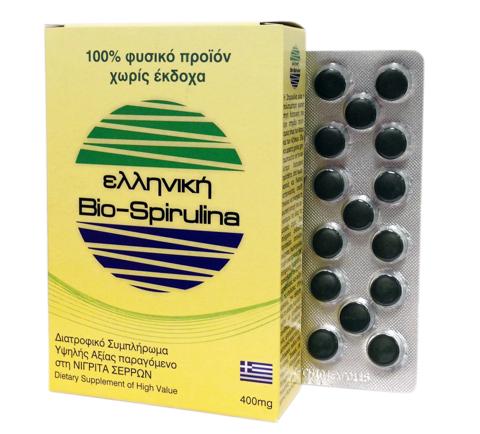
Protonex Health Foods Ελληνική Bio-spirulina 120 Δισκία 400mg
Out of Stock
Original price was: 12,60 €.10,71 €Current price is: 10,71 €.
Description
General information about Spirulina:
Spirulina is a primitive multicellular microbe that appeared on Earth 3.5 billion years ago. With its ability to photosynthesize by absorbing twice as much biomass as carbon dioxide (CO2) and to bind atmospheric nitrogen (N).
It has contributed to the formation of the modern earthly atmosphere, enriching it with plenty of oxygen. Biologically it is characterized as a thermophilic organism (optimum 35c) and an alkalophile (PH 9-11). Historically, the Spanish conquerors of Mexico in the 16th century observed the Aztecs collecting natural spirulina with thin nets from lakes and turning it into a cake, a major component of their diet. Today this process is done systematically on Lake Texcoco. A similar procedure is applied in Chad, Africa on Lake Kossoron, where spirulina is a major component of local populations, especially for pregnant women, and in local medicine. After World War II, German and French professors studied spirulina in detail. In 1967 spirulina was declared “the excellent food source of the future” by the International Association of Microbiologists. More recently, NASA has selected spirulina as the main source of food for astronauts.
Biochemical composition of the Greek bio-spirulina:
Spirulina contains about 100 substances and simple elements.
¬Protein: From 60-70% by dry weight. It contains all the essential amino acids and ten of the non-essential ones, ie it is a “complete” protein that is superior to the protein of milk, meat and eggs, with 95% solubility.
¬ Vitamins: Contains vitamins: B-1 (thiamine), B-2 (riboflavin), B-3 (nicotinamide), B-6 (pyrodoxine), B-9 (folic acid), B-12 (cyanocobalamin), Vitamin C, Vitamin D and Vitamin E, Biotin (H), Folic Acid, Inositol and Provitamin A.
¬ Essential fatty acids: It has a high content (30-60%) of polyunsaturated (PUFA), especially omega-3 fatty acids, such as γ-linolenic (ALA, linoleic (LA), stearidonic (SDA), eicosapentaenoic (EPA), docosahexaenoic (DHA) and arachidonic acid (AA), Palmitic acid, Oleic acid
¬ Minerals: Contains Calcium, Potassium, Magnesium, Sodium, Manganese, Phosphorus, Copper, Selenium, Iron, Zinc. It does not contain iodine.
¬ Photosynthetic pigments: Chlorophyll, Phycocyanin, Carotenes, Xanthophyll, Canthaxanthin, β-Cryptoxanthin, Phycobiliproteins.
¬ Nucleic acids: Contains Ribonucleic acid (RNA) and Deoxyribonucleic acid DNA.
Beneficial properties:
The spirulina you bought is a tiny plant that has grown from a “seed” from one of Germany’s largest universities, which has the largest algae bank in the world. As a plant, it is an amazing organism that exists and reproduces for 3.5 billion years, to which we owe our existence (first O2 production). It is the only plant that is grown in tanks – circular tracks in search of its food and solar energy in the form of photons, of certain wavelengths of the light spectrum. Before it reaches your hands, it has “run” about 40 kilometers, the size of a marathon. The different elements that spirulina provides us are completely water soluble and completely digestible, offering extra energy, supplementing deficiencies in the daily diet, restoring the right metabolic balance. It increases the performance in mental and physical work, sports and the mood for competitive distinction in the spaces where every modern person moves.
According to an official publication of the Food and Agriculture Organization (FAO) of the United Nations (Circular 1034 FIMA / C1034 (En), 155N 2070-6065 of 2008), spirulina is recognized as a supplementary cure in many diseases or health problems.
The most important is the strengthening of the immune system by Phycocyanin, which drastically reduces blood lipids, fights the feeling of “fatigue” by increasing the levels of immunoglobulin A (IgA) and M (IgM). (1)
¬ Proteins, vitamins, minerals and polysaccharides improve all physical performance, especially in athletes. In weightlifters it increases the capacity of the lungs without affecting blood pressure.
Sp
¬The dry biomass of spirulina contains up to 2% γ-linoleic acid (GIA), a percentage equal to that of breast milk. This high rate helps with arthritis, obesity, cardiovascular and zinc deficiency syndrome.
Ir Spirulina in experiments performed in Germany and Japan, has been shown to reduce cholesterol, triglycerides and low-density lipoproteins in the blood, acting beneficially in the fight against atherosclerosis. (2)
¬Due to the very high content of organic, immediately digestible iron, spirulina directly helps in the correction of anemias, low hematocrit and menstrual syndrome. (3)
¬Current studies are investigating the positive effect of spirulina on cancer prevention (leukemia), the protection of people undergoing radiotherapy and antiviral therapy to help people living with AIDS.
Due to its amazing nutritional and disease prevention properties, the UN funds extensive spirulina production and distribution programs mainly for children in Africa, Asia and South America.
How to consume it:
– Two pills in the morning along with a glass of water or juice and two at noon half an hour before meals for better absorption of iron.
Many also buy

Health Aid Vitamin C 500mg 60 Chewable tabs
Original price was: 18,50 €.12,95 €Current price is: 12,95 €.

Health Aid Vitamin C 1000mg 30 Chewable Tabs
Original price was: 17,70 €.12,39 €Current price is: 12,39 €.

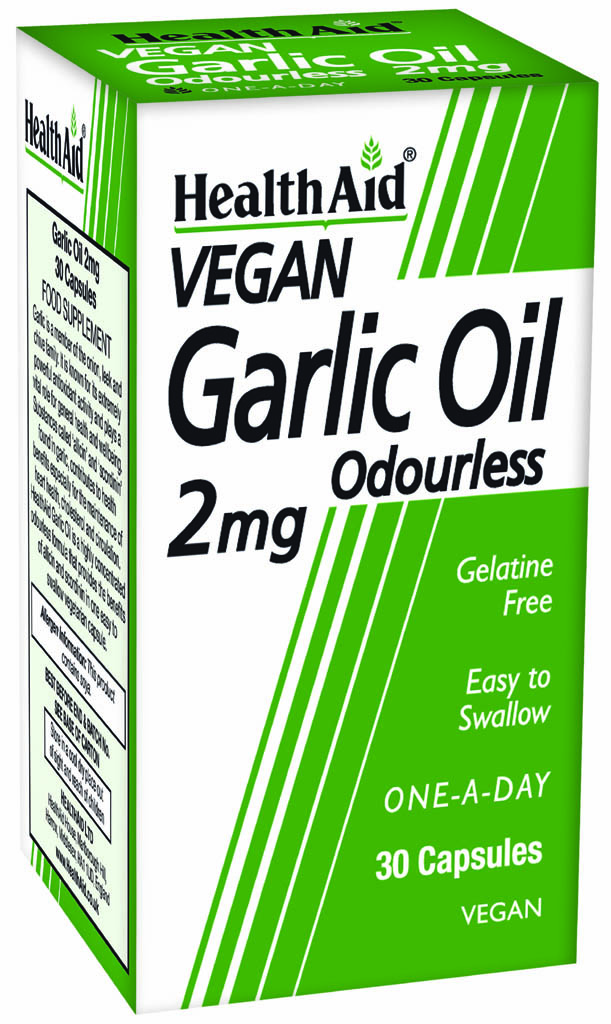
Health Aid Garlic Oil 2mg Odourless 30 caps
Original price was: 12,00 €.8,40 €Current price is: 8,40 €.
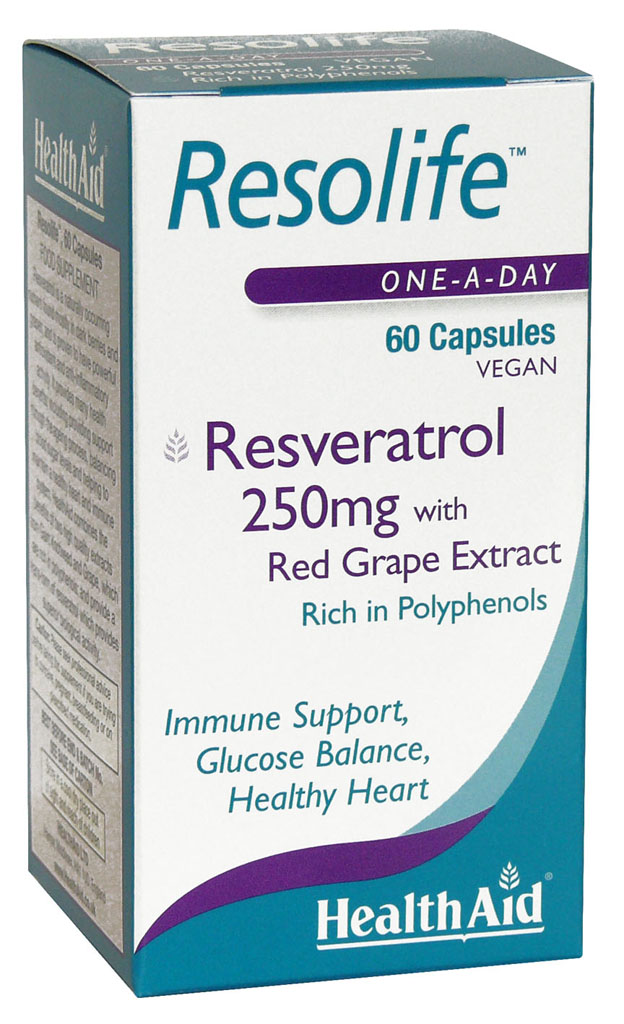
Health Aid Resolife Resveratrol 250mg 60 caps
Original price was: 56,00 €.39,20 €Current price is: 39,20 €.